
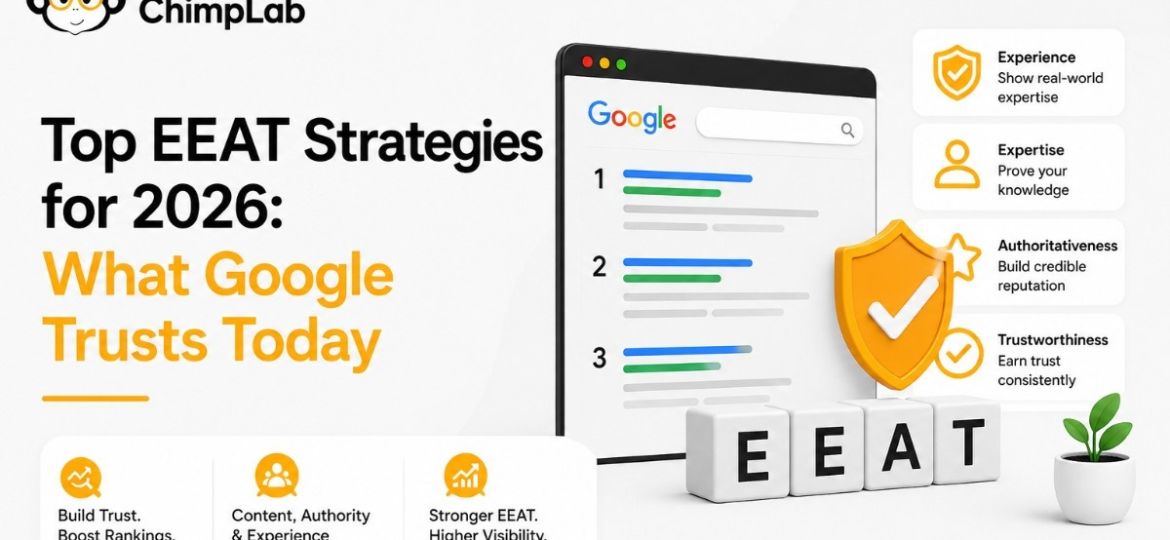
In today’s digital world, ranking on Google is not only about keywords and backlinks. Google now focuses more on content that is helpful, reliable, and created by trusted sources. This is where EEAT becomes important. EEAT stands for Experience, Expertise, Authoritativeness, and Trustworthiness. These factors help businesses improve search rankings, build customer trust, and grow online visibility.
In 2026, Google’s algorithms are smarter and more focused on user experience than ever before. Websites that provide genuine information and real value are more likely to rank higher in search results. At Chimplab Advertising, we help businesses grow with quality content, trust-building strategies, and effective SEO solutions. Our SEO service in Ahmedabad helps businesses achieve long-term growth and better online credibility.
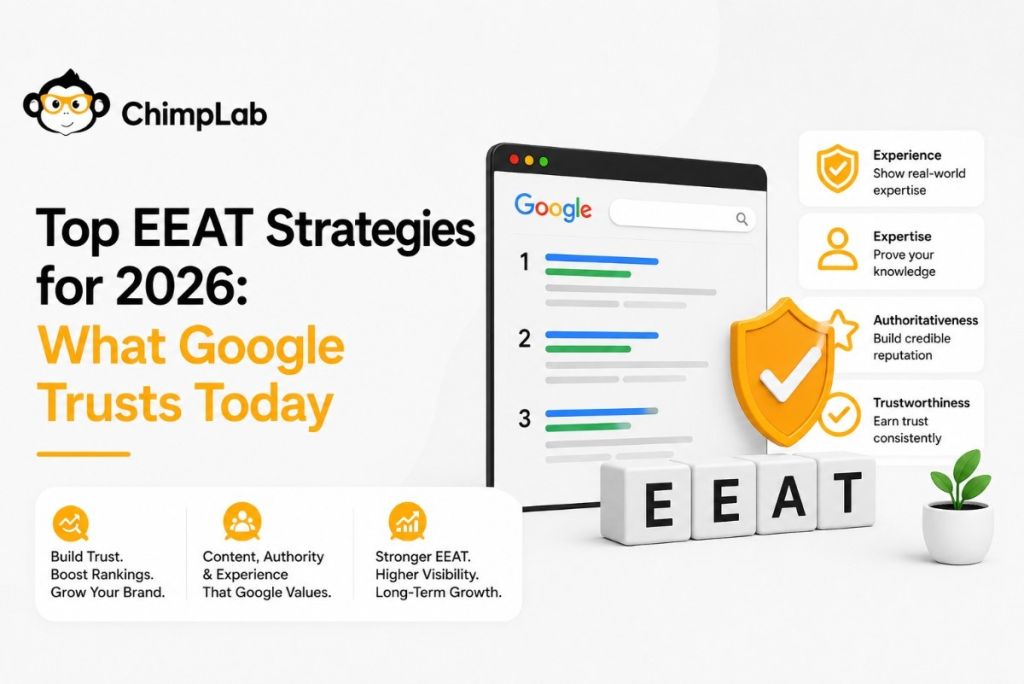
Why is EEAT So Important in 2026?
Google’s main goal is simple: helping users find accurate, helpful, and trustworthy information. Over the years, many websites tried to improve rankings using low-quality content, spammy SEO methods, and AI-generated pages without real knowledge or expertise. To solve this, Google has continuously updated its systems to identify content that truly provides value to users.
In 2026, EEAT is more important than ever. It has become one of the key factors for strong SEO performance. Websites that show real experience, expertise, authority, and trust are achieving better rankings in almost every industry. Even if a website has a good design and proper technical SEO, it can still struggle to rank well without strong trust and credibility signals.
What Does “Experience” Mean in EEAT?
The “Experience” part of EEAT focuses on whether the content creator has real-life experience with the topic they are discussing. Google now prefers content written by people who have actually used a product, provided a service, or solved a problem personally.
For example, if a digital marketing agency writes about SEO strategies, Google wants to see practical insights, real campaign examples, and actual industry knowledge. Generic content written only for rankings often fails to perform well because it lacks authenticity.
Businesses should start sharing real case studies, customer success stories, project experiences, and behind-the-scenes processes. This not only improves SEO performance but also helps build stronger trust with potential customers.
Adding real examples, screenshots, testimonials, and expert insights can significantly strengthen the experience factor of your content.
How Can Businesses Show Expertise Online?
Businesses can show their expertise online by sharing useful and informative content regularly. Google prefers content created by people or businesses that truly understand their industry. Writing blogs, guides, FAQs, videos, and helpful tips can show your knowledge and help users solve their problems instead of only promoting services.
For example, a company providing website development services can share content about website speed, mobile-friendly design, better user experience, and ways to improve conversions. High-quality and easy-to-understand content helps build trust with both users and search engines. That’s why many businesses choose a Digital Marketing agency in Ahmedabad to improve their SEO strategy and create valuable content for long-term online growth.
Why Does Google Care About Trustworthiness?
Google now gives high importance to trust when ranking websites. The main goal is to help users feel safe and confident while visiting a site. If a website looks outdated, unreliable, or provides unclear information, it may lose rankings in search results. Businesses can improve trust by using HTTPS security, adding correct contact details, keeping business information updated, and showing clear privacy or return policies. Customer reviews also help build credibility and create a positive impression.
Accurate and honest content is also very important for SEO. Websites should avoid fake promises, misleading headlines, or copied content because Google can now detect low-quality information more effectively. Adding author details, company information, certifications, and real customer proof can increase user confidence and make the website appear more trustworthy to both visitors and Google.
Is Helpful Content Still Important for SEO?
Yes, helpful content is more important than ever. In fact, Google’s Helpful Content System continues to reward websites that prioritize user value over search engine manipulation. Content should answer real questions clearly and naturally. Instead of writing only for algorithms, businesses should focus on what users actually want to know.
For example, if someone searches for “how to improve local SEO,” they expect actionable insights, practical steps, and clear explanations. Thin content with unnecessary keyword stuffing will not perform well.
Helpful content usually includes:
- Real examples and practical advice
- Clear explanations without complicated language
- Updated information relevant to current trends
- Structured formatting with headings and readable paragraphs
- Genuine solutions to user problems
Websites that consistently publish useful content often build stronger engagement, better rankings, and higher trust over time.
How Does User Experience Affect EEAT?
User experience plays a huge role in SEO performance today. Even if your content is excellent, a poor website experience can reduce rankings and increase bounce rates. Google pays attention to how users interact with websites. If visitors leave quickly because pages load slowly or navigation is confusing, it sends negative signals.
Modern websites should focus on:
Fast loading speed, mobile responsiveness, clean design, easy navigation, and clear call-to-actions. A professional UI/UX design not only improves conversions but also strengthens trust.
Businesses investing in website and mobile app development should understand that user experience directly affects SEO performance. A smooth digital experience encourages users to stay longer and engage more with content.
At Chimplab Advertising, we help brands create SEO-focused digital experiences that combine design, performance, and content quality together.
What Role Does Branding Play in EEAT?
Branding plays an important role in improving EEAT because it helps build trust and credibility. Strong brands usually get more backlinks, online mentions, branded searches, and customer attention. Google often gives better visibility to brands that people already recognize and trust. Today, branding and packaging are not only about design but also about creating a reliable online presence.
Consistent branding across websites, social media, ads, and business profiles helps businesses look more professional and trustworthy. Using the same message, visuals, and tone on every platform improves brand identity. Positive customer reviews, testimonials, media coverage, and audience engagement also help strengthen trust and support better EEAT signals.
Can Social Media Improve EEAT?
Social media can help improve EEAT by increasing a business’s online visibility and building trust with customers. Active social media profiles allow businesses to share useful information, customer experiences, industry news, and expert advice, which helps create a strong and reliable brand image.
Using both social media marketing and paid advertising can improve brand awareness even more. When people regularly see a business online, they become more familiar with it and trust it more. While Google may not directly count social media likes as a ranking factor, a strong online presence can still support better authority and overall SEO performance.
Why Are Backlinks Still Important in 2026?
Backlinks continue to play a major role in SEO, but quality matters far more than quantity today. Google values links from trusted and relevant websites. One high-quality backlink from an authoritative source is often more valuable than hundreds of low-quality links.
Businesses should focus on earning backlinks naturally through high-value content, partnerships, PR activities, guest posting, and industry collaborations. Spammy link-building techniques are becoming increasingly risky because Google can now detect unnatural patterns more effectively. A trusted SEO service in Ahmedabad will focus on building genuine authority rather than using outdated SEO shortcuts.
How Can Businesses Prepare for the Future of SEO?
The future of SEO is centered around trust, user experience, and authenticity. Businesses that continue relying only on technical tricks may struggle to maintain visibility. To prepare for the future, companies should focus on creating content that genuinely helps users, improving website performance, building strong branding, and showcasing real expertise.
AI-generated content is growing rapidly, but human insight still matters. Google increasingly values originality, practical experience, and trustworthy information. Businesses should also regularly update old content, improve website security, and maintain accurate business information across all digital platforms.
SEO in 2026 is not just about ranking higher. It is about becoming a trusted source in your industry.
Final Thoughts
EEAT is becoming one of the most important parts of modern SEO. Google now gives better rankings to websites that share helpful content, real expertise, and trustworthy user experiences. Businesses that focus on quality, credibility, and customer trust instead of quick SEO tricks are more likely to achieve long-term online growth. From strong content and branding to website performance and user experience, every element plays a role in improving search visibility.
To stay competitive in today’s digital world, businesses need smart marketing strategies that build trust and deliver results. Chimplab Advertising helps brands grow with advanced SEO, social media marketing, paid ads, branding, and website development services designed for long-term success. If you want to build a strong online presence and grow your business with effective digital marketing solutions, contact us today and take your brand to the next level.